
ERS 2026 Welcome Pack
Strados Welcome Pack
Explore Strados brochures and selected clinical research across spirometry, cough monitoring, lung sound analysis and FeNO.
Visiting us at ERS? Meet the team at Booth Y.01B.
ERS Congress 2026
Strados Posters Presented at ERS 2026
Explore four research posters presented by the Strados team at the ERS Congress 2026, spanning cough characterization, motion intensity, and remote respiratory monitoring in pediatric care.
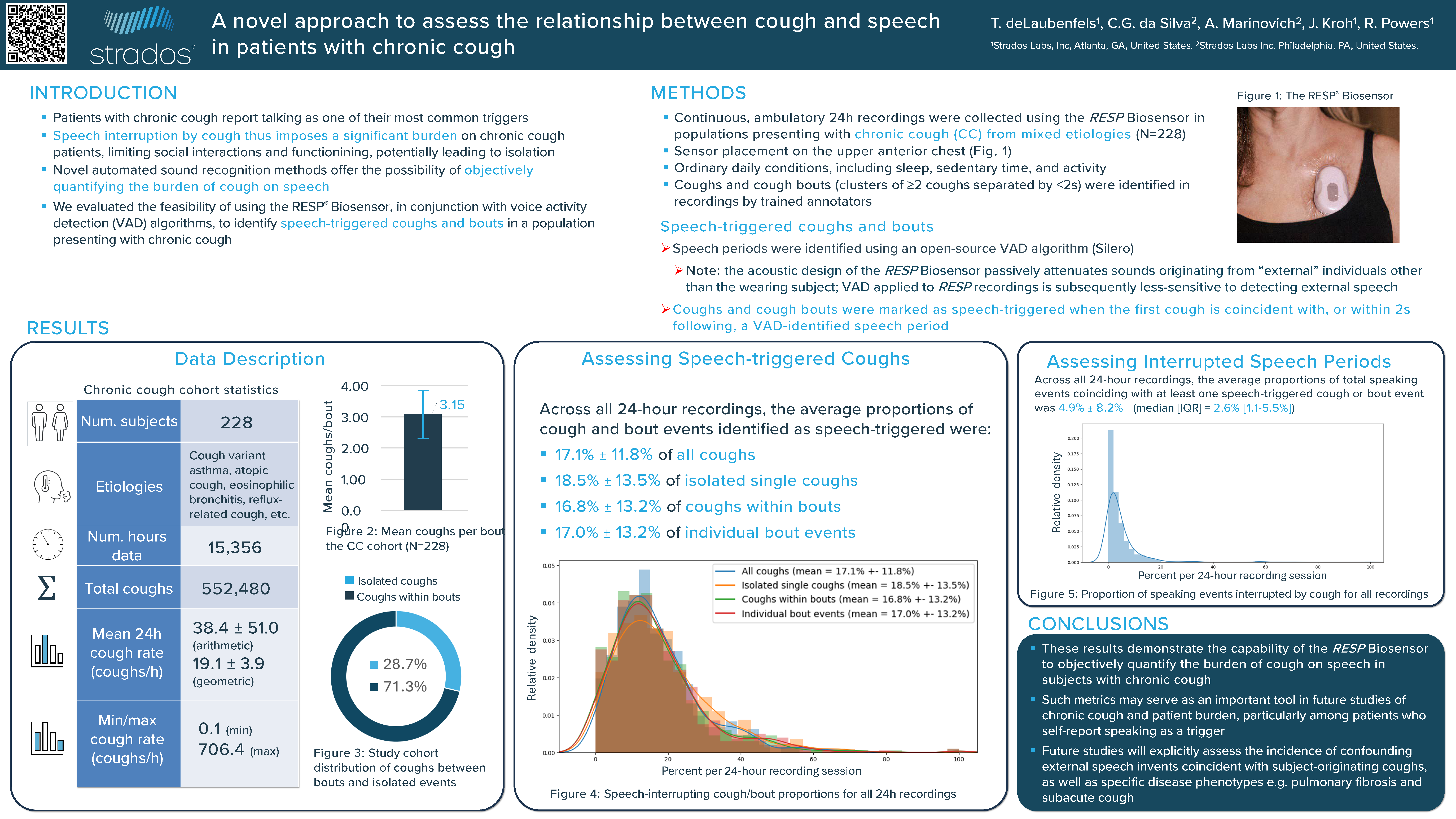
A Novel Approach to Assess the Relationship Between Cough and Speech in Patients With Chronic Cough
This research explores a new approach to understanding how cough interacts with speech in patients with chronic cough, extending cough assessment beyond frequency alone.
Tom deLaubenfels, PhD
Tuesday, September 8 | 12:30–14:00
Innovations in Cough Research and Monitoring
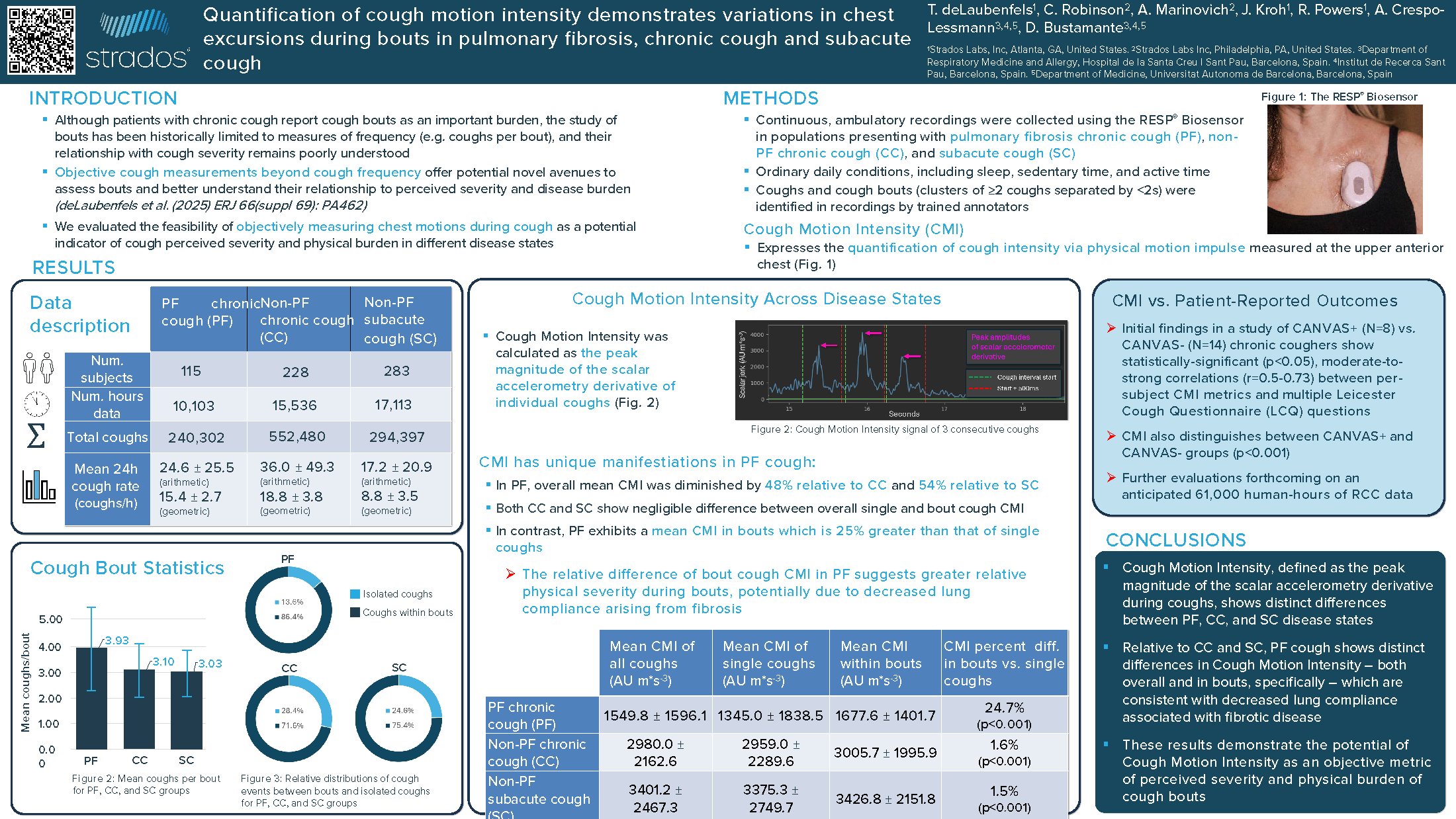
Quantification of Cough Motion Intensity Demonstrates Variations in Chest Excursions During Bouts in Pulmonary Fibrosis, Chronic Cough and Subacute Cough
This study examines cough motion intensity and differences in chest excursion during cough bouts across pulmonary fibrosis, chronic cough, and subacute cough populations.
Tom deLaubenfels, PhD
Tuesday, September 8 | 12:30–14:00
Innovations in Cough Research and Monitoring
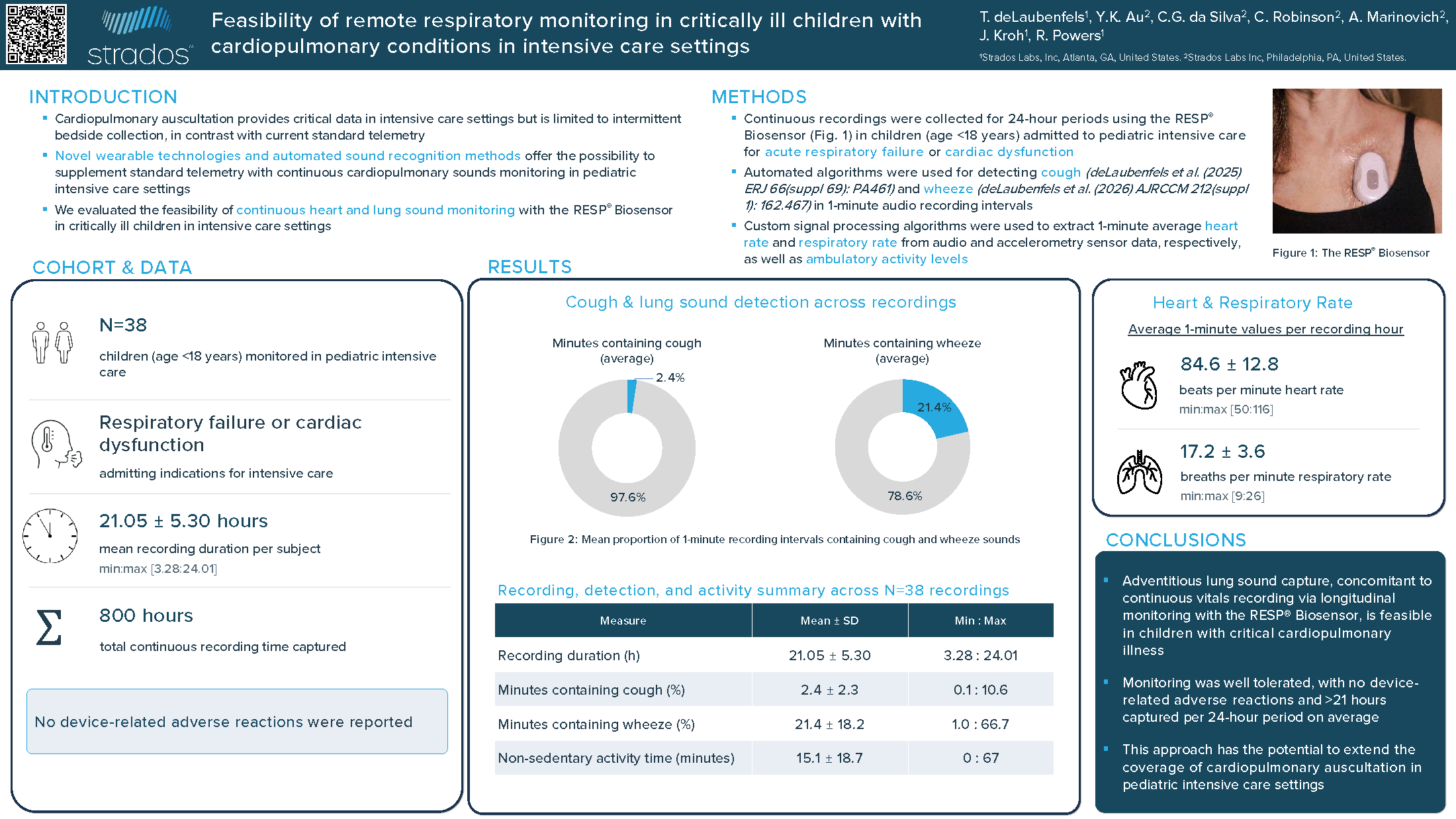
Feasibility of Remote Respiratory Monitoring in Critically Ill Children With Cardiopulmonary Conditions in Intensive Care Settings
This study evaluates the feasibility of remote respiratory monitoring in critically ill pediatric patients with cardiopulmonary conditions in intensive care settings.
Shane Krauss
Tuesday, September 8 | 12:30–14:00
Neonatal and Paediatric Intensive Care and Prematurity-Related Respiratory Sequelae
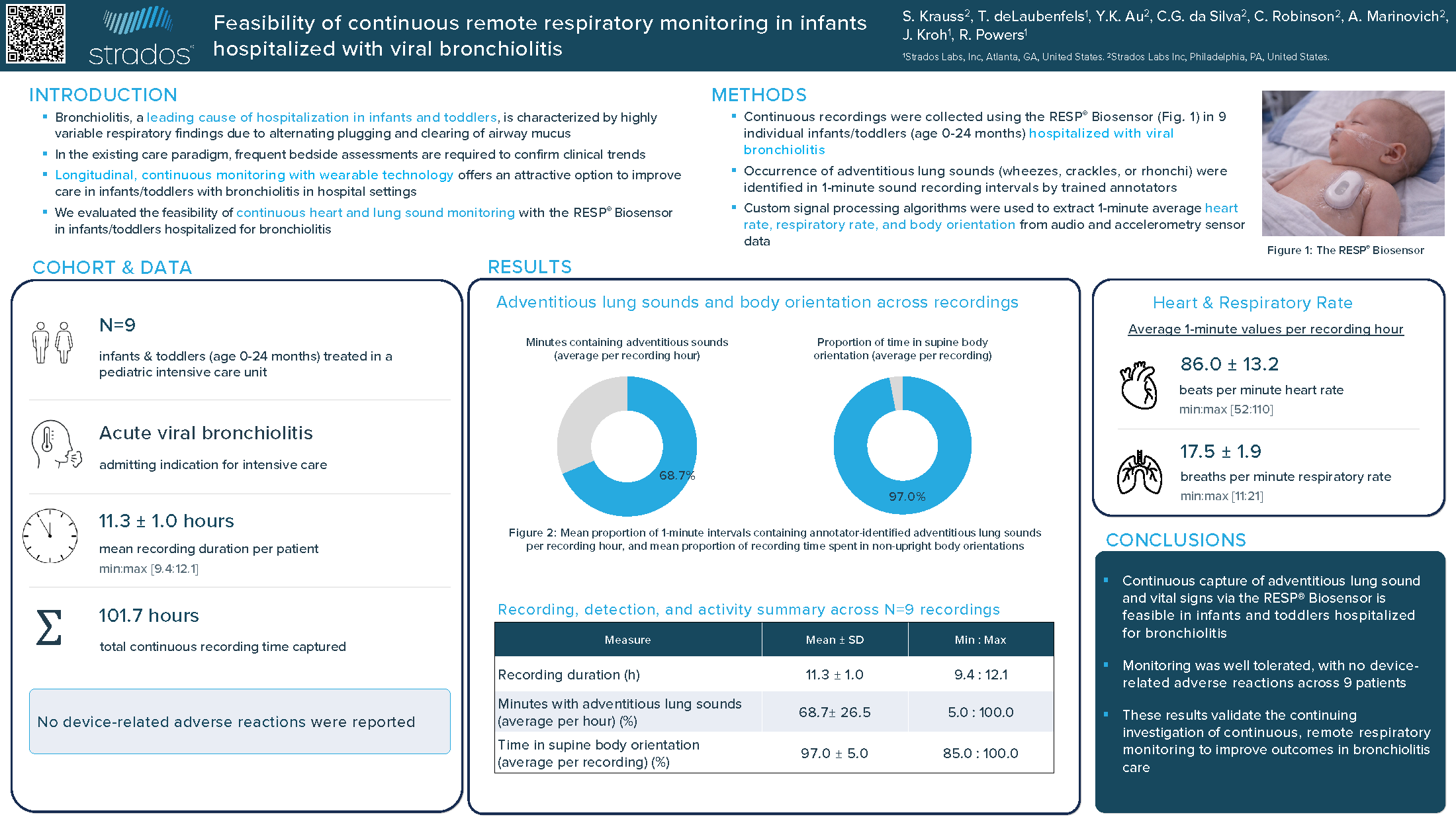
Feasibility of Continuous Remote Respiratory Monitoring in Infants Hospitalized With Viral Bronchiolitis
This research examines the feasibility of continuous respiratory monitoring in infants hospitalized with viral bronchiolitis.
Shane Krauss
Sunday, September 6 | 12:30–14:00
The World of Paediatric Respiratory Infections: Bronchiolitis, Pneumonia and Empyema
Start Here
New to Strados? Start here.
Get a short overview of the Strados Endpoint Suite: spirometry, cough monitoring, lung sound analysis, and FeNO through one respiratory endpoint partner.
View the Endpoint Suite OverviewBrowse by Solution
Explore Resources by Solution
Browse selected brochures and research chosen to provide a clear starting point for each respiratory endpoint solution.
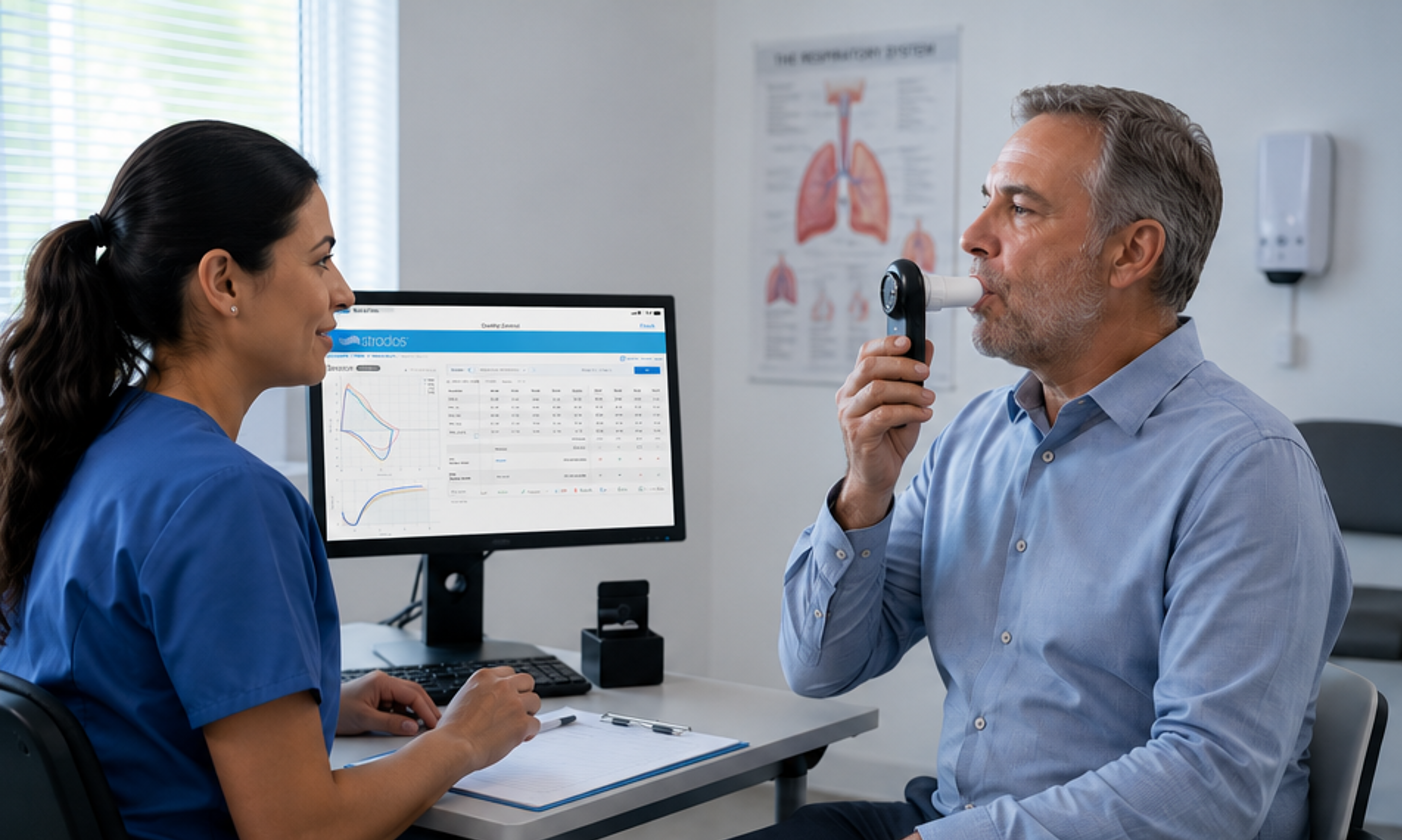
Air Next
Spirometry
In-clinic and at-home pulmonary function testing supported by the Air Next spirometer, consistent workflows and centralized quality review.
Brochures
Selected publications
Clinic vs. Home Spirometry Concordance
ERJ Open Research · 2025
Pradhan A, et al.
Why it matters
Virtually supervised home spirometry matched clinic spirometry with excellent concordance (ICC 0.95–0.98) and >95% of patients found it easy to use.
- ICC 0.95–0.98 vs. clinic
- >95% found it easy to use
- n=68 asthma and COPD
Home Spirometry Quality in ILD
Am J Respir Crit Care Med · 2022
Althobiani M, et al.
Why it matters
91.8% of 1,281 unsupervised home sessions in ILD patients met acceptable-quality criteria after one training session.
- 91.8% acceptable-quality sessions
- 1,281 unsupervised sessions
- n=20 ILD patients
Home Spirometry Feasibility in CF
Pediatric Pulmonology · 2022
Davis J, et al.
Why it matters
The Air Next showed high reliability and good concordance with clinic spirometry (r = 0.91) in a real-world CF cohort.
- r = 0.91 vs. clinic FEV₁
- 80% adherence
- Favorable patient experience
Remote vs. Clinic Bioequivalence
Phase 2a CF Trial · 2022
Harker E, et al.
Why it matters
Unsupervised remote spirometry was bioequivalent to supervised clinic spirometry in a phase 2a CF trial (FEV₁ and FVC within 80–120%).
- FEV₁ ratio 104.1% (90% CI)
- Pearson r = 0.92
- 196 matched sessions
Adherence to Remote Home Spirometry
Remote Asthma Assessment · 2023
Robshaw M, et al.
Why it matters
77% of 1,554 home sessions met acceptable quality with 97% engagement over 12 weeks in a physiologist-led asthma service.
- 77% grade A–C quality
- 97% engagement over 12 weeks
- 1,554 sessions, n=35
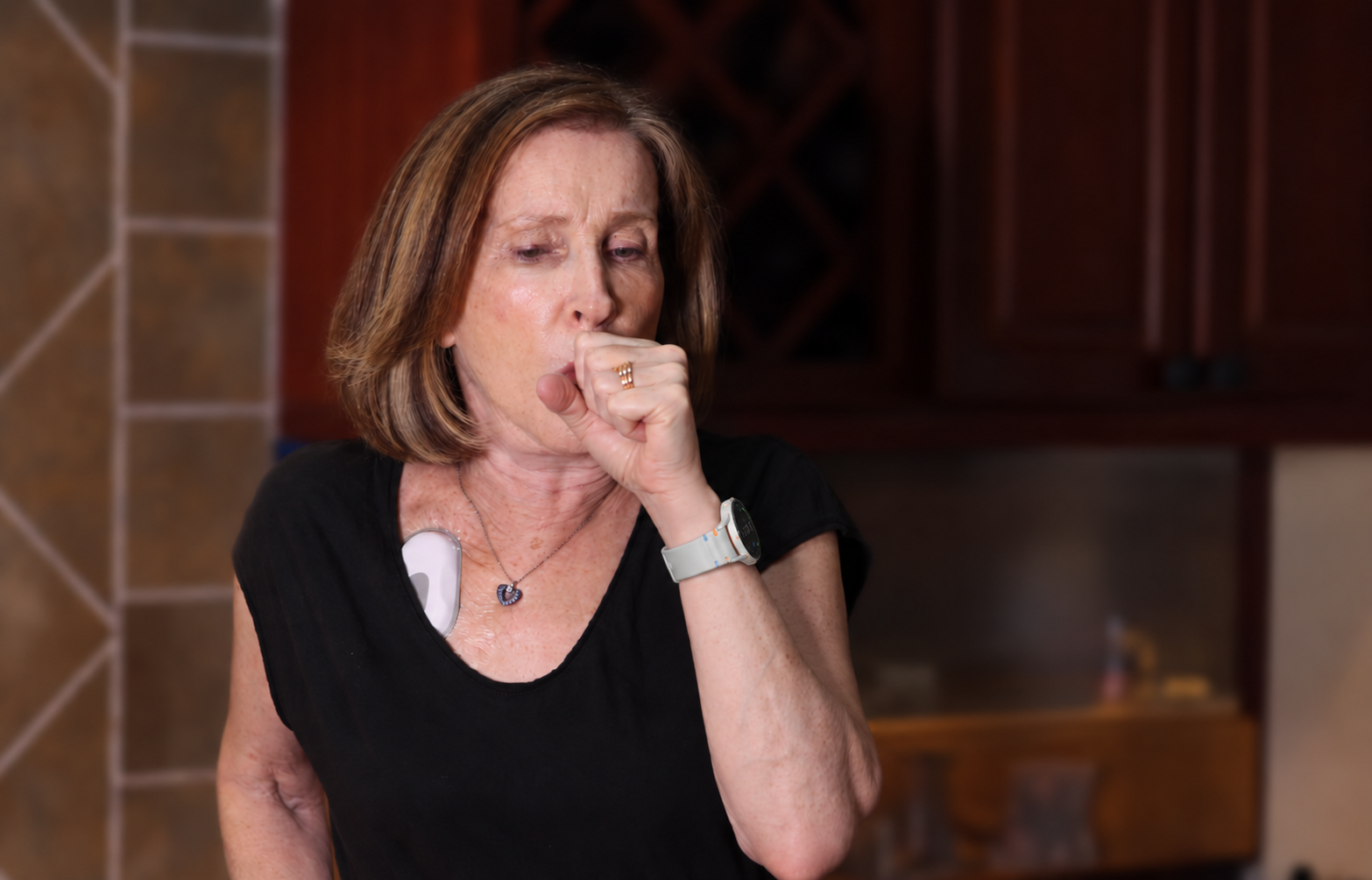
RESP Biosensor and RESP Watch
Cough & Lung Sounds
Continuous, objective cough measurement and acoustic monitoring of wheeze, crackles and other respiratory sounds with the RESP® Biosensor and RESP Watch.
Selected publications
Feasibility of Cough Sound Amplitude
PFF Summit 2025 · 2025
deLaubenfels T, et al.
Why it matters
Cough amplitude (intensity) was feasibly measured with the RESP Biosensor and showed characteristics distinct from cough frequency in chronic cough.
- n=63 subjects, 31,923 cough events
- Bimodal amplitude distribution
- Distinct from cough frequency
CoughCheck Detection in Chronic Cough
ERS 2025 · 2025
deLaubenfels T, et al.
Why it matters
CoughCheck derived 24-hour cough frequencies with good agreement with human annotation (R=0.95) in real-world chronic cough recordings.
- Precision 94.9%
- Sensitivity 95.0%
- R=0.95 vs. human annotation
Cough Intensity During Bouts
ACC 2025 · 2025
deLaubenfels T, et al.
Why it matters
Cough amplitude was 47% higher during cough bouts than in isolated coughs, highlighting the RESP Biosensor's potential to characterize cough burden.
- n=360 recordings
- 47% higher peak amplitude in bouts
- 71.8% of coughs in bouts
A Novel Wearable Auscultation System
ATS 2020 · 2020
Au YK, et al.
Why it matters
The RESP system captures lung sounds with fidelity equivalent to FDA-cleared electronic stethoscopes, designed for continuous remote monitoring.
- 50Hz–2000Hz frequency range
- Equivalent to FDA-cleared stethoscopes
- HIPAA compliant
Clinical Performance in Chronic Lung Disease
ATS 2022 · 2022
Glass M, et al.
Why it matters
RESP provided substantially equivalent performance to a Littmann 3200 stethoscope across wheeze, rhonchi, crackles and cough in chronic lung disease.
- 47/50 paired recordings identical
- Equivalent to Littmann 3200
- Single device sufficient
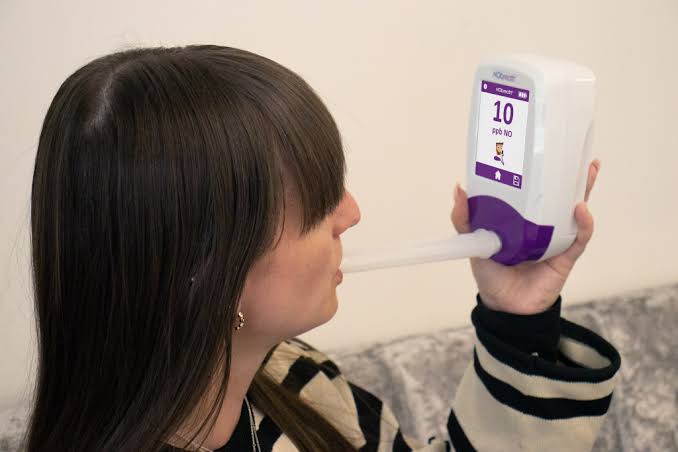
NObreath
FeNO
Portable fractional exhaled nitric oxide measurement with the NObreath® FeNO device for standardized airway-inflammation assessment.
Brochures
Selected publications
FeNO Analyzer Usability in the LEAD Study
Scientific Reports · 2025
Idzko M, et al.
Why it matters
NObreath achieved the highest usability score among portable FeNO analyzers tested, with high agreement at clinically relevant thresholds.
- n=486 participant cohort
- 87.6/100 usability score
- Highest-rated portable analyzer
- ≥95% agreement at 40 ppb
Portable FeNO vs. Standard Analyzer
J Asthma · 2010
Pisi R, et al.
Why it matters
NObreath FeNO values were directly comparable to the stationary NIOX standard (r=0.95) in 154 asthma patients, supporting portable FeNO in primary care.
- r = 0.95 vs. NIOX
- n=154 asthma patients
- ICC 0.967 repeatability
NObreath Reproducibility vs. Reference Devices
J Breath Res · 2010
Kapande KM, et al.
Why it matters
NObreath FeNO measurements were reproducible and in good agreement with both chemiluminescence (r=0.92) and NIOX MINO portable analyzers.
- r = 0.92 vs. Logan
- 18 healthy volunteers
- Reproducible across 24h
NIOX VERO vs. NObreath Agreement
Tuberc Respir Dis · 2021
Kang SY, et al.
Why it matters
NIOX VERO and NObreath FeNO values showed good agreement and strong positive correlation (r=0.78), with a derived conversion equation for cross-device use.
- r = 0.78 between devices
- n=99 adults
- Conversion equation derived
Looking for resources for a specific study?
Tell us which respiratory endpoints or indications you are evaluating, and our team can help identify the most relevant evidence and study approach.
Discuss Your StudyContact sales@stradoslabs.com

